|
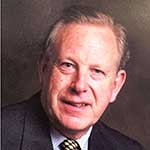
Sir Patrick McNair-Wilson
Late Coldstream Guards
|
Some MPs become ministers. Some hold governments to account as chairs or members of select committees. Yet others prefer to serve their constituencies from the relative obscurity of the back benches.
Sir Patrick McNair-Wilson was one of the latter. He was an MP for 31 years in total, 29 of them representing the New Forest constituency in Hampshire. Early on, he served four years as a parliamentary private secretary and two as an opposition frontbench spokesman. That was, however, the highest he climbed on the political ladder, and arguably his greatest achievement at Westminster was to preserve and protect his constituency’s beloved New Forest.
He helped prevent it from being encroached on by a Lyndhurst bypass, not because he was opposed to the bypass, but because he feared its construction would set a precedent. He helped prevent Shell from drilling for oil there. He helped prevent it from being spoiled by pipelines, by the Army and by campers attending music festivals at nearby Beaulieu, where he lived in a 500-year-old timber-framed farmhouse.
McNair-Wilson had one other claim to fame. Between 1986 and 1988, he chaired a joint Lords and Commons committee which reformed parliamentary procedures. Today’s MPs ‘have me to thank for the fact they don’t have to sit up till 2am in the morning and get home with the milk the following morning in order to get legislation passed’, he once proclaimed. The next year, he received a knighthood in the Queen’s birthday honours.
Patrick Michael Ernest David McNair-Wilson was born in Hampstead, north London, in 1929. His father, Robert, was a Scottish heart specialist who was the medical correspondent of The Times for many years and twice stood unsuccessfully for parliament as a Liberal. Patrick’s younger brother, Michael, and Michael’s daughter, Laura Farris, both served as Conservative MPs for Newbury.
He was educated at The Hall School in Hampstead, along with many children of Jewish refugees from Hitler’s Germany. An intervention by Geoffrey Dawson, then editor of The Times, secured him a place at Eton, but he was no academic, and at the age of 17, he joined he Coldstream Guards.
During the next six years, he served in British-mandated Palestine as its Jewish population fought for independence, in Libya and in Egypt. He also guarded the coffin of George VI as he lay in state in Westminster Hall in 1952, his first official duty at Westminster.
He left the Army with the rank of captain that same year and married Diana Methuen-Campbell, a travel journalist from an aristocratic family whom he had met at a dance. They later had a son, Guy, now a businessman and designer, and four daughters, Jennifer, who died in 2016, Ari, a photographer, Anne and Kate. Diana died in 2015.
He was employed first by the French Shipping Company and later by the British Iron and Steel Federation, where he developed a keen interest in heavy industry. He simultaneously pursued his political ambitions through various jobs at Conservative Central Office and as director of the London Municipal Society, an organisation that supported Conservative candidates in London council elections.
He was rewarded with the nomination to fight the marginal seat of Lewisham West at the 1964 general election and won it with a majority of just 886 over Labour. His first spell in parliament proved short-lived. After just 17 months, Harold Wilson called a snap election, and McNair-Wilson lost his seat by 2,034 votes.
That same year, 1966, he became a director of Michael Rice, a public relations company, whose clients included the Arab League and various Gulf states. But in 1968, he returned to parliament as MP for New Forest, a seat he would hold with substantial majorities at the next seven general elections.
He served as PPS to John Peyton, a transport minister in Ted Heath’s government, from 1970 to 1974, and as a shadow energy spokesman from 1974 to 1976, standing down a year after Margaret Thatcher succeeded Heath as leader of the Conservative Party.
McNair-Wilson was an admirer of Thatcher and remained staunchly loyal even as his colleagues plotted to remove her in 1990. ‘We may not win with Mrs Thatcher’, he told them, ‘but we can’t win without her’. However, she never appointed him a frontbench spokesman or minister.
That may have been because their views did not always align: he lamented the decline of Britain’s steel and coal industries and had been the first Tory spokesman to attend the annual conference of the National Union of Mineworkers. He maintained that he was once offered a ministerial job but turned it down because he wanted time to spend with his family and pursue his business interests. He continued to work in public relations and was a consultant to Union Carbide.
McNair-Wilson stood down as an MP in 1997, when his constituency was divided into two. He retired to his farmhouse in Beaulieu, where he indulged his passion for pottery and making radio-controlled model aeroplanes - most of which crashed.
At the age of 72, he achieved a lifetime ambition by acquiring a pilot’s licence and bought himself a tiny propellor-driven microlight aircraft in which he flew around Europe and down to his holiday home near Rheims in France. Happily, his microlight flights were more successful than those of his model planes.
Sir Patrick McNair-Wilson, Conservative politician, was born on 28th May 1929. He died on 4th December 2025, aged 96.
With thanks to The Times |
|